If you’ve ever spent time navigating the chaotic lead-up to a commercial or industrial electrical upgrade, you already know that even small, missteps can snowball into costly delays or safety risks. As a supplier of T2 40KA surge protective devices (SPDs), the question I hear most often from electricians, facility managers, and property owners isn’t just “Do these devices work?”—it’s “Is installing a T2 40KA SPD really as straightforward as the product specs make it sound?” T2 40KA Surge Protective Device
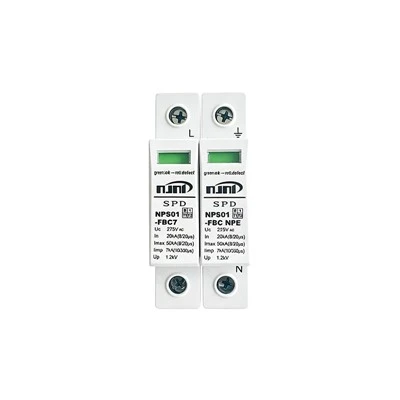
Let me start with a personal anecdote from last spring. I was on a call with a facilities manager from a 120,000-square-foot distribution warehouse, who’d just spent two weeks scrambling to fix a botched SPD install on their main switchboard. Their electrician, a reliable guy with 10 years of residential experience, had assumed all Class 2 (that’s the official classification for T2, for anyone new to SPD naming) surge protectors were cut from the same cloth. He’d bolted the 40KA unit to the wall, wired the line and load terminals, and flipped the breaker—only to trigger a ground fault alarm 10 minutes later. By the time we walked through his setup, it was clear he’d skipped a few critical steps specific to T2 40KA devices, and ended up wasting a day of downtime plus $1,200 in replacement parts.
That story stuck with me because it underscores a key truth: T2 40KA SPDs aren’t “easy to install” in the generic, plug-and-play way a phone charger is, but they’re also not so complicated that you need a specialized engineering degree to get right. The ease of installation boils down to two things: knowing what a T2 40KA device is actually designed for, and following the exact wiring and mounting rules spelled out in the national and international standards that govern surge protection.
First, let’s ground this in basics, because not everyone who’s asking about installation has memorized IEC 60364 or NEC Article 280. T2 SPDs (sometimes called “load side” or “distribution” SPDs) are the workhorses of surge protection. They’re meant to handle high-energy surges—think the 10,000-volt blasts from lightning strikes that travel down power lines, or the surges from heavy industrial equipment kicking on and off. A 40KA rating means this device can safely divert up to 40,000 amps of surge current to the ground without failing. That’s a big number, and it’s why these devices are standard for commercial buildings, data centers, warehouses, and retail spaces.
Now, back to installation. For most licensed electricians, the physical part of mounting a T2 40KA SPD is simple on paper. Here’s what the standard install steps look like, according to industry guidelines: pick a location within 3 feet of the main service disconnect (critical, because that ensures the SPD intercepts surges before they reach sensitive downstream gear), mount it on a non-combustible surface (like the metal switchboard panel, which is required anyway), strip the correct length of wire for line, load, and ground terminals (usually 6 AWG for 40KA units, per manufacturer specs), tighten the torque screws to the exact setting (usually 12 to 15 lb-in, to avoid loose connections that cause overheating), and test it with a multimeter after wiring.
Wait—so why did that warehouses’ electrician mess up? Because he skipped two key rules specific to T2 40KA devices. First, he used a 8 AWG ground wire, which is too small for a 40KA unit. The ground wire has to be able to carry all that surge current fast, and an undersized wire can overheat or melt during a surge, turning a safety device into a fire hazard. Second, he wired the SPD to the load side of the meter, not the line side of the main breaker—meaning the surge was already past the meter before the SPD caught it, wasting a huge part of its protection capacity.
That’s not to say T2 40KA SPDs are tricky, but they do require paying attention to fine print that many electricians new to industrial surge protection miss. I’ve seen the same mistake made with smaller commercial units for office buildings, too. A local general contractor called me last fall, frustrated because he’d installed three T2 40KA SPDs in a new strip mall, and two of them failed their first surge test. When we checked his setup, he’d wired all three in parallel instead of series. Parallel wiring works for smaller, residential-grade SPDs, but series wiring is required for T2 40KA units to ensure consistent voltage clamping across all phases, especially in three-phase commercial systems. That’s a quirk specific to higher-amp T2 devices, and it’s one that’s often glossed over in product brochures that lead with “easy install” claims.
Let’s be clear, though: when done correctly, a T2 40KA SPD is one of the easiest surge protection devices to get up and running. I’ve had dozens of regular commercial electricians reach out to say they installed a 40KA unit on a small grocery store’s main switch in half a day, with no issues, once they reviewed the installation guide and double-checked their wire sizes and wiring configuration. The biggest barrier isn’t the technical skill—it’s assuming that because a T1 or T3 SPD is simple, a T2 40KA is too.
Another common misconception: “easy install” means no tools or training. Even a basic T2 40KA SPD requires a multimeter for continuity checks, a torque wrench to tighten terminals, and a working knowledge of commercial electrical systems. That’s not a high bar, but it’s a bar that needs to be acknowledged. If you’re a licensed electrician with experience working on commercial switchboards, you already have all the tools and training you need to install a T2 40KA SPD correctly, in about 2 hours on average, including testing. If you’re a DIYer who’s only wired a few residential outlets, that’s a different story—you should hire a licensed professional, full stop. I’ve seen too many DIY installs of SPDs go wrong, and the risks aren’t worth it: fire, equipment damage, even injury from electrical shock during a surge event.
As a supplier, we do everything we can to make the install process as smooth as possible. Every T2 40KA SPD we ship comes with a 12-page, fully illustrated install guide that breaks down each step for single-phase, three-phase, and split-phase systems, plus a quick reference card that electricians can tape to their toolboxes. We also have a 24/7 technical support line for anyone who has questions during installation, and last year we hosted three free virtual training sessions for electricians, walkthroughs that covered common mistakes with T2 40KA units, that drew over 200 attendees. We even send out a pre-install checklist with every bulk order, to make sure electricians have the right wire sizes, torque tools, and test equipment before they show up on site.
But here’s the part that doesn’t make it into product marketing: even the best-installed T2 40KA SPD will underperform if you don’t match it to your system’s specific needs. A 40KA unit is perfect for most commercial spaces, but if your building has a high concentration of sensitive electronics—like a small medical clinic with diagnostic imaging gear, or a data center with server racks—you might need a higher rated unit, or a multi-layered surge protection system. Conversely, if you’re installing a T2 40KA SPD on a 100-amp residential service (though that’s rare), it’s overkill, and you’ll be wasting money on capacity you’ll never use.
I think the best way to answer the question “Is a T2 40KA SPD easy to install?” is: yes, if you approach it like any other commercial electrical component. It’s not a plug-and-play gadget, but it’s also not a custom industrial machine that needs months of planning. The key is to stop treating it like a generic SPD, read the guide, check your specs, and double-critical steps like ground wire size and location, just like you would for any other safety device—like a circuit breaker or a GFCI outlet.
That warehouse manager I talked to last spring? We helped him re-wire the faulty SPD for free (under our 1-year warranty) and connected him to a local electrician who specialized in surge protection, to do a full walkthrough of his entire facility’s surge setup. Six months later, he texted me a photo of his warehouse’s surge meter, showing zero major surge events—proof that when installed correctly, a T2 40KA SPD does exactly what it’s supposed to do.
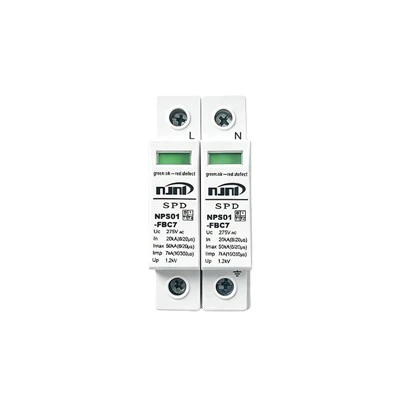
For anyone considering adding a T2 40KA SPD to your property, whether you’re an electrician doing a new build or a facilities manager upgrading your protection, reach out to discuss your specific needs. We can help confirm the right unit for your system, answer any installation questions, and connect you to trusted professionals if needed. Surge protection isn’t a one-size-fits-all solution, and we’re here to make sure your SPD is installed right, the first time, so you don’t have to deal with costly downtime or safety risks down the line.
T1 50KA Surge Protective Device References
IEC 60364-7-71: Electrical installations of buildings – Part 7-71: Requirements for special installations or locations – Sections for functional safety and surge protection, International Electrotechnical Commission, 2020
National Electrical Code (NEC) Article 280: Surge Protective Devices, National Fire Protection Association, 2023
Surge Protective Device Installation Best Practices, Electrical Construction & Maintenance Magazine, 2022
UL 1449: Standard for Surge Protective Devices, Underwriters Laboratories Inc., 2021
Nanjing Ningpu Lightning Protection Equipment Manufacturing Co., Ltd.
As one of the most professional T2 40ka surge protective device manufacturers and suppliers in China, we’re featured by quality products and good price. Please rest assured to buy customized T2 40ka surge protective device made in China here from our factory. Also, pricelist is available.
Address: Building 1, No.20 Shengyuan Road, Lishui Economic Development Zone, Nanjing City, Jiangsu Province, China
E-mail: 3796023563@qq.com
WebSite: https://www.npspd.com/
