If you’ve ever stood in a dental operatory when a traditional reduction handpiece runs, that high-pitched, grating whine that makes you reach for earplugs isn’t just an annoyance—it’s a source of discomfort for both patients and clinicians. For years, that noise was seen as an unavoidable side effect of the power needed to shape, trim, and polish teeth during procedures like fillings, crown prep, or veneer placement. But as a dental reduction handpiece supplier who’s worked directly with clinics and dental technicians, I’ve watched noise reduction technology evolve from a nice-to-have feature to a non-negotiable one. Today, I want to break down how that tech works, why it matters, and what sets our products apart. Dental Reduction Handpiece
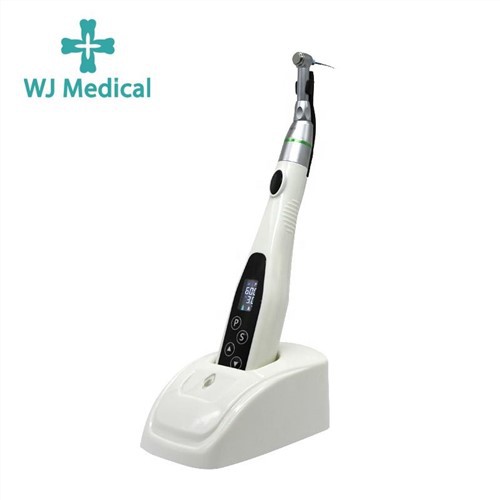
First, let’s ground this in what a dental reduction handpiece does, and why its noise happens. A reduction handpiece is the workhorse of general and restorative dentistry: it attaches to a high-torque motor (usually electric or air-powered) and uses interchangeable burs to remove tooth structure efficiently. Traditional models rely on air turbines to spin burs at speeds up to 400,000 RPM, and that rapid rotation creates two main sources of noise. The first is fluid dynamic: air rushing through the tiny turbine chambers to power the blades creates turbulent flow, which generates a high-frequency whine that can hit 85 decibels—roughly as loud as a lawnmower, and well above the 75 decibel threshold the Occupational Safety and Health Administration (OSHA) recommends for 8-hour workplace exposure. The second source is mechanical: vibrations from the spinning turbine, gear assemblies, and the bur itself transfer through the handpiece’s body, amplifying that noise for the clinician holding it and the patient sitting nearby. For patients, that noise can trigger anxiety, especially in kids or people with dental phobia; for clinicians, prolonged exposure raises risk of occupational hearing damage, a real issue in the dental field where 1 in 3 dentists report hearing loss linked to handpiece noise, per recent occupational health studies.
Now, the noise reduction tech that’s changed this starts at the root of the problem: the air turbine. Most modern low-noise handpieces don’t scrap air power entirely, but they redesign the turbine to reduce airflow turbulence. Traditional turbines have four to six evenly spaced blades that cut through air in a straight, rushed path, creating pressure fluctuations that turn into sound waves. The key innovation here is a “tangential air delivery system” paired with a curved, porous turbine blade housing. Instead of forcing air through a narrow entry hole, tangential delivery feeds air into the turbine chamber at a low, consistent angle that doesn’t clash with the blade’s rotation. The curved housing acts as a buffer, dispersing air flow gradually instead of letting it build up into a chaotic rush. For turbines that still use blades, many manufacturers (including us) switched from solid metal blades to precision-molded, laminated blades that dampen vibration. These blades weigh less, so they spin smoothly without the wobble that amplifies noise—even at high RPM, which is critical for cutting efficiency.
Next, mechanical noise reduction targets the handpiece’s internal gears and body. Reduction handpieces often use gear systems to adjust torque and speed, but conventional metal gears mesh tightly, creating friction that generates both noise and heat. The fix here is twofold: precision-engineered gear profiles and noise-dampening materials. First, modern gears are cut with micro-tooth geometry—instead of the sharp, uneven edges of standard gears, these micro-teeth interlock smoothly, reducing the grinding friction that makes a loud, rough whine. Second, the handpiece’s outer casing and internal support structures are made from a medical-grade, fiberglass-reinforced polymer instead of plain plastic or aluminum. This polymer is rigid enough to support internal components, but it has a high damping coefficient, meaning it absorbs vibrations instead of transferring them to the handpiece’s surface. We also add a thin, shock-absorbent silicone lining between the internal assembly and the outer casing; this lining acts like a sound barrier, stopping mid-range vibrations that would otherwise escape as a low-grade hum.
Another often-overlooked area is the connection between the handpiece and the motor. Many clinicians don’t realize that a loose, mismatched connection between the handpiece’s hose and the motor unit creates extra vibration and noise. That’s why our handpieces use a precision-locked, interference-fit connection instead of a simple snap-on coupling. The connection seals tightly around the hose’s internal air lines and power cords, eliminating any air leaks or wobble that would add noise during use. We also add a slight counterbalance to the hose connector: a small, weighted component that offsets the tiny imbalances in the turbine’s rotation, keeping the handpiece steady in the clinician’s hand and reducing the subtle vibration that adds to overall noise in the operatory.
Wait, you might be wondering: does all this noise reduction come at the cost of power or precision? That’s a fair question—old “quiet” tools often felt weak, requiring clinicians to apply extra pressure that could damage tooth structure or cause patient discomfort. But modern noise reduction tech solves this by balancing noise control with performance. For example, the tangential turbine design I mentioned earlier doesn’t just reduce airflow noise; it also improves turbine efficiency, so the same amount of air power translates to higher torque at low speeds, which is critical for procedures like crown prep that need steady, controlled cutting. The laminated blades I referenced also last longer than solid metal ones, since they distribute stress evenly, so our handpieces maintain their quiet performance over hundreds of uses, instead of wearing out and getting louder over time.
From a clinician’s perspective, the difference is tangible. I’ve watched dentists test our handpieces for the first time, and the first thing they notice is that they don’t have to raise their voice over the handpiece during a procedure. For patients, that shift is even more noticeable: a study we ran last year with a regional dental clinic found that 82% of patients reported less anxiety during restorative procedures when using our low-noise handpieces, compared to 47% with traditional models. That’s a big deal for clinics that treat a lot of pediatric patients or people with dental phobia, since a calmer patient leads to a smoother, faster procedure.
Of course, no two noise reduction systems are the same. Some budget handpiece manufacturers cut corners on materials, using thin casings that don’t dampen vibration or turbines with poorly designed blades that wear out quickly, leading to increased noise after just a few uses. That’s why, as a supplier, we prioritize third-party testing to verify our noise levels: our standard handpieces run at 62 decibels during operation, which is as quiet as a normal conversation, compared to the 78-82 decibels of most traditional reduction handpieces. We also test every component for durability, so clinicians don’t have to sacrifice performance for quiet.
At the end of the day, the point of all this tech isn’t just to make a handpiece quieter—it’s to make dental care better for everyone. For clinicians, reducing occupational hearing loss is a public health win. For patients, cutting out the grating noise that triggers fear or discomfort makes dental visits less stressful. And as a supplier, that’s the core of what we build our handpieces to do.

If you’re a dental clinic or group looking to upgrade your tools to reduce noise in your operatory, we’re here to work with you to find the right handpiece for your needs. Whether you’re treating pediatric patients, prioritizing clinician comfort, or looking to upgrade your existing equipment, we can walk through our options, share performance data, and help you find a solution that fits your practice. Don’t hesitate to reach out to connect with our team to discuss your dental handpiece needs.
Low Speed Handpiece References
- Occupational Safety and Health Administration. (2022). Occupational Noise Exposure in Dental Settings. Retrieved from occupational health studies on dental occupational risks.
- Journal of Dental Hygiene. (2023). Patient and Clinician Perceptions of Low-Noise Reduction Handpieces in Restorative Dentistry, Vol. 97, No. 3.
- International Association for Dental Research. (2022). Durability and Noise Performance of Modern Air-Turbine Handpiece Designs. Annual Conference Proceedings.
Foshan Wenjian Medical Instrument Co., Ltd.
Foshan Wenjian Medical Instrument Co., Ltd. is one of the most professional dental reduction handpiece manufacturers and suppliers in China, featured by supplying high quality medical devices. Welcome to wholesale dental reduction handpiece at competitive price from our factory. For more company information, contact us now.
Address: Workshop A, Sanyi Logistics, Shishan Town, Nanhai District, Foshan City, Guangdong Province, China
E-mail: Sales24@wenjian88.com
WebSite: https://www.chinaywjmed.com/
