If you’ve spent any time sourcing industrial equipment, chances are you’ve stumbled across HF (High Frequency) welding machines—they’re the workhorses for bonding everything from inflatable boat fabric to vinyl tarps, and they’ve built a solid reputation for speed, strength, and versatility. But over the years, I’ve lost count of how many times I’ve gotten a call or email from a customer staring down a project with thin-walled materials, asking the same question: “Can your HF welding machine actually handle this?” HF Welding Machine

As a HF welding machine supplier with 12 years in the game, I get it. Thin-walled materials—think 0.1mm to 1mm PVC, polyurethane (PU) films, or even multi-layered laminates like PET/PVC used in medical packaging—feel like a tricky fit for a process that’s often associated with bonding thick, heavy-duty materials. I’ve seen people write HF welding off entirely for thin work, assuming it’s too aggressive, or use it and end up with warped edges, burned holes, or weak, inconsistent bonds. But here’s the thing: when set up correctly, an HF welding machine isn’t just capable of welding thin-walled materials—it’s often the better option for projects that need precision, flexibility, and longevity.
Let’s start with how HF welding works, because that’s where a lot of the confusion comes in. Unlike traditional welding methods that use heat applied from a single external source—like a hot air gun or a soldering iron—HF welding uses electromagnetic energy to excite the dipoles (polar molecules) in the material itself. For thermoplastics, which most thin-walled materials for HF welding are, the polar molecules align with the alternating HF field we generate (usually between 27.12 MHz, the industry-standard ISM frequency, to avoid interference with other electronics). That alignment creates friction at the molecular level, which in turn generates heat inside the material, not just on the surface. Once the material reaches its melting point, we apply pressure to hold the layers together as they cool, creating a molecular bond that’s just as strong as the base material itself.
For thin-walled materials, this is a game-changer. Traditional hot methods can’t penetrate those tiny gauges evenly—you either burn a hole through the thin film or leave the top layer barely warm enough to stick. With HF, the heat is localized exactly where we need it, along the weld seam, so the rest of the material stays cool and intact. But “localized” doesn’t mean “one-size-fits-all.” That’s the part most customers don’t realize: HF welding for thin materials requires tuning every single parameter to the material’s thickness, type, and even the end application.
Let’s talk about the variables we adjust every day for thin work, because this is where a lot of first-time users go wrong. First, the power output. For a 0.1mm PVC film used in blister packaging, we’re not cranking out 10 kW like we would for a 5mm thick inflatable boat seam. We’re usually running between 0.5 kW and 2 kW, depending on the seam length and the type of electrode we’re using. Too much power, and you get a “burn-through” that leaves tiny pinholes—deadly for things like medical pouches that need to be airtight. Too little power, and the molecules don’t get excited enough to fuse, leaving a weak, peelable bond that will fail under the slightest stress.
Then there’s the electrode design. When I see customers using the same sharp, pointed electrodes they use for thick vinyl on thin materials, I know they’re going to have problems. Pointed electrodes concentrate too much HF energy in a tiny area, which is perfect for thick seams but a disaster for thin films. For thin-walled work, we switch to blunt, rounded electrodes or even silicone-capped electrodes (yes, silicone—we use food-grade, heat-resistant silicone for FDA-compliant medical work) that distribute the pressure and energy evenly along the seam. We also adjust the pressure: for thin materials, we’re using 5 to 10 psi, not the 20 psi we use for thick tarps. Too much pressure squishes the thin material so flat that the molecular bond is broken, creating a gap that will leak. Too little pressure, and the melted layers don’t stay pressed together during cooling, leading to a weak bond.
Wait, but what about specific material types? Not all thin-walled thermoplastics are created equal. PVC is the most common for thin HF work because it has a high dipole moment—it reacts really well to HF energy, heats up consistently, and creates strong bonds. PU is another one, popular for outdoor gear because it’s flexible and durable, but it has a slightly lower dipole moment, so we usually bump the power by 10-15% compared to PVC of the same thickness. Then there are laminates—like PET/PVC used in blister packs for consumer electronics, where PET is a non-polar material that doesn’t heat up well in HF. For these, we usually add a thin primer layer along the weld seam to make the PET polar, so it will bond to the PVC layer. I’ve had customers come to us after trying to weld these laminates with a regular hot air welder, getting a bond that peeled off in seconds; with a tuned HF machine, those same laminates create a bond that’s stronger than the PET layer itself.
I should also address a myth I hear all the time: “HF welding will warp thin materials.” That’s only true if you’re not controlling the heat and pressure. Because the heat is generated inside the weld seam, not across the entire sheet, the surrounding material stays at room temperature—no uneven heating, no warping, no shrinkage. For projects like custom gift bags made from 0.2mm PU film, that precision is non-negotiable. We’ve even welded thin material with pre-printed logos, and the ink stays crisp because only the seam area gets hot enough to melt the plastic. Contrast that with a hot stamp, which would blur the ink if you even get close to it.
But let’s get real—this isn’t for every thin-walled material, and it’s not for every project. If your thin material is a non-thermoplastic, like glass or metal, HF welding won’t work at all, obviously. And for ultra-thin materials (under 0.05mm, like cigarette paper or very thin aluminum foil), we usually partner with other methods, like ultrasonic welding, because the HF energy is too easy to control at that gauge. But for 90% of the thin-walled thermoplastic projects our customers bring us, HF is the go-to.
I want to share a recent example that still sticks with me. A few months back, a customer in the medical device space reached out to us in a panic. They were making 0.3mm PVC blister pouches for single-use glucose test strips, and their old hot air welder was causing two big problems: 1) 12% of the pouches had pinhole leaks from overheating, and 2) the bonds were peeling during sterilization, leading to a 18% product return rate. They were about to switch to solvent bonding, which was adding 20% to their production time and using harsh chemicals they couldn’t keep in their clean room.
We set them up with a modified HF welding machine—custom blunt electrodes, power limited to 1.2 kW, pressure tuned to 7 psi, and a 10-second cooling cycle (another thing we adjust for thin work: longer cooling time means the bond sets evenly, no cracking). Their pinhole rate dropped to less than 0.5%, and the bond strength was so high that they could drop the pouches from 6 feet without the seam breaking. They cut production time by 25% because HF welding is faster than hot air, and they eliminated all solvent use from their process. That’s the kind of win that makes this job worth it.
Another example: a small custom inflatable decor company that uses 0.8mm PVC for their portable display stands. They were using RF heat sealing (a similar process, sometimes confused with HF) that would often cause wavy, uneven seams on thin PVC, making their displays look unprofessional. We switched them to our HF machine with a continuous seam electrode, adjusted the power to 1.5 kW, and added a programmable pressure foot that keeps the material flat as it feeds. Now their seams are straight, consistent, and their displays hold air for 6+ months—something their old method couldn’t guarantee.
So, what should you look for if you’re considering HF welding for thin-walled materials? First, don’t buy a one-size-fits-all machine. A lot of entry-level HF machines on the market are designed for thick materials, with too much power and no way to tune the fine parameters. Look for a machine with adjustable power output (ideally from 0.1 kW up, not just a few big steps), interchangeable electrodes (blunt, rounded, silicone-capped), and programmable pressure and cooling times. If you’re working with FDA-compliant materials (like medical packaging or food-grade bags), make sure the machine has non-toxic components and meets 21 CFR standards for food contact.
Also, don’t skip the test run. Good HF suppliers will always send you sample electrodes or let you run test pieces on their machine before you buy. Bring your actual thin material, not a sample cut from a different roll, because even small differences in material composition (like a 0.1mm variation in thickness) can change the weld. We always run 3-5 test seams on every customer’s material, check the bond strength with a peel test, and inspect for pinholes with a pressure test, before we even talk about pricing.
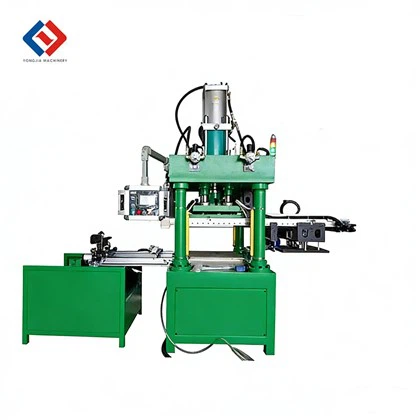
At the end of the day, the question isn’t “Can an HF welding machine be used for thin-walled materials?”—it’s “Can you tune an HF welding machine for thin-walled materials?” When done right, it’s not just possible, it’s often the best choice for projects that need a reliable, strong bond without the downsides of traditional methods. If you’re working on a thin-walled project and you’re not sure if HF is the right fit, we’re here to help. We’ll walk you through the parameters, run test pieces, and make sure you get a machine that’s calibrated specifically for your material, your seam design, and your production needs. We’ve spent 12 years refining this process, and we’ve helped hundreds of customers—from small startups to large medical manufacturers—solve their thin-walled welding challenges. Reach out to our team to discuss your project today.
Hot Pressing Machine References
- Becker, R. A. (2015). High Frequency Welding: Principles and Applications for Thermoplastic Bonding. Industrial Press Inc.
- Tatham, A. S., & Sheppard, T. (2008). Thermoplastic Joining Technologies for Flexible Packaging. Journal of Plastic Film and Sheeting, 24(3), 217-238.
- U.S. Food and Drug Administration. (2020). CFR Title 21, Part 177: Indirect Food Additives: Polymers.
Dongguan Yongjia Machinery Equipment Co., Ltd.
We are one of the most reliable hf welding machine manufacturers and suppliers in China, specialized in providing high quality customized service. Please feel free to wholesale advanced hf welding machine at low price from our factory. For quotation, contact us now.
Address: No. 240, Chashan South Road, Chashan Town, Dongguan City, Guangdong Province, China
E-mail: info@yjwelding.com
WebSite: https://www.yjhighfrequencymachine.com/
