As a steel coil supplier who’s worked with fabricators, construction crews, and automotive engineers for over 12 years, one question I get at least once a week is: “What’s the real difference between mild steel coils and high-strength steel coils?” I’ve had new clients come in thinking they can swap one for the other on a framing project, only to run into costly bending or structural failures. Last quarter, a small metal shop almost lost a $50k part fabrication contract because they used mild steel coils instead of high-strength ones for a bracket—turns out the bracket needed to support 1,200 lbs, and mild steel bent under half that load. That moment stuck with me: if even seasoned metal workers mix these two up, it’s worth breaking down the differences clearly, no confusing jargon, so you don’t make the same mistake. Steel Coil

First, let’s start with the basics. Mild steel, also called low-carbon steel, is the most common steel coil we stock. What makes it “mild” is its carbon content: usually between 0.05% and 0.25%. That’s a tiny amount compared to other steels, and that low carbon is what gives it its trademark traits. It’s cheap, easy to weld, cut, bend, and form—we use it for everything from HVAC ductwork to furniture frames to basic structural studs for residential homes. But here’s the catch: its strength tops out around 30,000 psi (pounds per square inch) yield strength, for reference. That means if you put 30,000 pounds of force on one square inch of mild steel, it’ll bend permanently. It’s not brittle, but it’s not built for heavy loads.
High-strength steel coils (we carry HSLA, or High-Strength Low-Alloy, variants) flip that script. Their carbon content is a little higher, usually 0.15% to 0.30%, but the real magic comes from tiny amounts of other elements: manganese, niobium, vanadium, or titanium. Those elements act like secret ingredients—they bond with the iron and carbon to create a much tighter, stronger grain structure. The yield strength here is way higher: most of our HSLA coils hit 50,000 to 80,000 psi, and some specialty grades go even higher. That means you can use a thinner piece of high-strength steel to support the same load as a much thicker piece of mild steel.
Let’s talk applications, because that’s where the difference hits hardest. I watched a commercial construction crew last month order mild steel coils for a bridge girder’s side supports—they ended up reordering twice, because the mild steel warped under the weight of the concrete it was holding. Now, they use high-strength coils for all their bridge components. Mild steel’s sweet spot is projects that need ease of fabrication over maximum strength: home framing, garage doors, metal shelving, automotive body panels (think the outer shell of a car, which doesn’t need to hold huge loads, just be shapeable and rust-resistant if coated). HSLA coils go where weight and strength matter: heavy equipment frames, truck trailer chassis, bridge supports, crane arms, even the safety beams in car crash tests. Last year, we supplied HSLA coils to a wind turbine manufacturer—their tower brackets needed to withstand wind speeds up to 150 mph, and mild steel would have flexed too much to keep the turbine stable.
Worth noting: surface treatment and corrosion resistance vary, too. Mild steel is almost always hot-dipped galvanized or painted to prevent rust—its low carbon makes it reactive to moisture, so bare mild steel will start rusting within a few months outdoors. HSLA coils, especially weathering grades (like Corten steel), have a different structure that forms a tight, protective rust patina on its own over a few years. That means Corten HSLA doesn’t need paint, which cuts down on maintenance for things like highway guardrails or outdoor architectural features. But if you’re bending HSLA, you have to be careful—its tighter grain means it’s a little less ductile than mild steel. I always tell clients if they’re making sharp bends, pre-heat the HSLA first, because it can crack if bent cold too fast.
Cost is another big point, but it’s not always as straightforward as “HSLA is more expensive.” At first glance, HSLA coils cost 15% to 30% more per ton than mild steel. But let’s do the math: if a project needs a 1/4-inch thick mild steel plate to hold 10,000 lbs, that plate weighs 40 lbs per square foot. A 1/8-inch thick HSLA plate of the same strength weighs 20 lbs per square foot. So you need half the material. If you’re building a trailer, that cuts the total weight by thousands of pounds, which means better gas mileage for the truck pulling it. For construction, that means fewer supports, less labor, and lower shipping costs for the steel itself. I’ve had clients come back a month after using HSLA say they saved $12k on their project because they needed 30% less material—way more than the extra cost of the coils.
A common myth I hear all the time is that high-strength steel is too hard to work with, so mild steel is better for most jobs. That’s only half true. For small, simple jobs—like making a garden trellis or a bookshelf—mild steel is perfect. It’s cheap, easy to cut with a jigsaw, weld with a basic MIG welder, and bend by hand with a pipe clamp. But for anything that’s going to carry a load last 20 years or more, HSLA is worth the investment. Last year, a client tried to use mild steel for a 10-foot-wide gate for their farm. A year later, the gate sagged so bad it wouldn’t latch—they had to replace it with HSLA coils, and it’s held up through three blizzards since then.
I also want to mention grade naming, because that trips up a lot of new buyers. Mild steel is usually labeled as A36 steel, which is the standard for structural mild steel. If you see a coil labeled A36, that’s your mild steel. High-strength steel will be labeled with grades like A572 Grade 50 (50,000 psi yield strength), A514 (100,000 psi, specialty heavy-duty), or HSLA 45. It’s not just marketing—those numbers are a good rule of thumb to check before you order. Last month, a client tried to order “high-strength steel” for a crane part, but they got a coil labeled A36 (mild) because the supplier didn’t specify the grade. I caught it before cutting, and we swapped it for A572 Grade 50, which is exactly what they needed.
So when do you pick which? Let’s break it down:
- Go with mild steel coils if you need low cost, high formability, and the load is light or temporary. Think: residential studs, furniture, ductwork, small enclosures.
- Go with high-strength steel coils if weight savings, long-term structural load, or durability are priorities. Think: bridge supports, trailer chassis, heavy equipment, safety components.
At the end of the day, the biggest mistake I see is treating steel coils as a one-size-fits-all product. I’ve had clients save thousands by picking the right coil for the job, and I’ve seen others lose money and time by mixing them up. If you’re unsure which is right for your project, just reach out. We work with fabricators, contractors, and engineers every day, and we’ll help you pick the right coil for your load, timeline, and budget. No sales pitch, no confusing jargon—just straight advice from a supplier who’s been in the industry long enough to know that the right material makes all the difference.
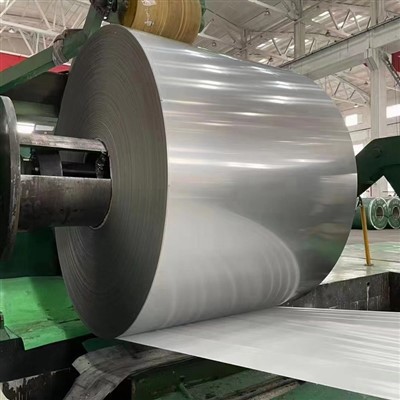
If you’re ready to place an order or have questions about your next project, feel free to get in touch to discuss your specific needs, and we’ll work with you to find the best solution for your application.
Stainless Steel Coil References
- The World Steel Association. (2022). Steel Grades and Properties: Low-Carbon vs. High-Strength Steels. Retrieved from industry technical publications
- American Society of Mechanical Engineers (ASME). (2021). Structural Steel Specifications for Load-Bearing Applications. ASME Technical Data Report
- National Association of Steel Fabricators (NASF). (2023). Cost-Benefit Analysis of Mild vs. High-Strength Steel for Commercial Construction. NASF Industry Guide
Shanxi Midas Industrial Co., Ltd.
We’re known as one of the most professional steel coil manufacturers and suppliers in China. With abundant experience, we warmly welcome you to buy cheap steel coil made in China here from our factory. For price consultation, contact us.
Address: 28th, Huanqiu Jinrong Zhongxin, Xieyuan Road, Changfeng Business District, Taiyuan City, Shanxi Province, China
E-mail: midassteel@163.com
WebSite: https://www.midassteel.com/
