Hey there, let’s cut to the chase—if you’ve ever worked on a residential solar installation, you know how messy, loud, and sometimes straight-up annoying pile driving can be. Neighbors banging on their doors, local codes breathing down your neck, and you’re stuck wondering, “Is there a way to make this less of a headache?” That’s where I come in. I’m a supplier of solar pile drivers, and I get this question all the time: Can a solar pile driver actually work for pile driving in residential areas? Spoiler: The short answer is yes, but let’s get into the real deal—no salesy fluff, just what I’ve seen out in the field, because that’s how I roll. Solar Pile Driver
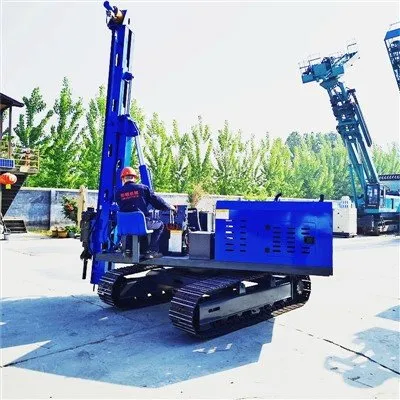
First, let’s break down what a solar pile driver even is, for anyone who’s new here. I don’t mean that big, clunky industrial rig you see on highway projects—those are loud, use diesel, and are way too big for a typical suburban backyard. The solar-powered ones we supply are compact, run on sun energy (duh, solar), and they don’t need a diesel generator to run the hammer. Wait, but “run on solar” doesn’t mean they only work when it’s sunny, right? Nah—they’ve got lithium-ion battery packs that hold charge for days, so even if it’s been rainy or overcast for a few days, you’re still good to go. That’s a huge win for residential spots, where space is tight and you can’t just park a semi-sized rig in a neighbor’s lawn.
Now, let’s talk about the big concern everyone has with residential work: noise. Old-school diesel pile drivers? They’re like a jackhammer on steroids—measured at 90-110 decibels, which is as loud as a chainsaw or a rock concert. Most residential areas have noise ordinances that cut off after like 7 PM, and some even ban loud work on weekends. What’s the decibel level on a solar pile driver? Our models run at 60-75 decibels. Let’s put that in perspective: 60 dB is normal conversation, 75 dB is the volume of a vacuum cleaner. That’s way below the threshold that most cities restrict, and you can work later without getting noise complaints from the lady next door who needs her beauty sleep. I’ve had installers tell me they used our units on a Friday evening till 8 PM, and not a single knock on the door. That’s a game-changer, trust me.
Next up: space. Suburban backyards aren’t empty lots—you’ve got patios, garden beds, that weirdly placed oak tree the HOA won’t let you cut down, and neighbors’ houses 10 feet away. Industrial pile drivers are so big you need a 20-foot clearance just to move them, which is impossible for most residential jobs. Our solar pile drivers are compact—like, 4 feet wide, 6 feet long, and they weigh around 1,500 pounds. That means you can fit them through a standard 3-foot backyard gate, no problem. No need to get special permission to park a massive truck in the street, no need to tear down a fence to get the rig in. I had a customer last month in Denver who had a super narrow backyard, and he couldn’t use a traditional rig—his neighbor’s fence was only 2 feet from his property line. He used our mini solar pile driver, and he only needed a 5-foot space to set it up. No fence damage, no awkward conversations with the neighbor. Win-win.
Wait, but what about power? Can a solar pile driver actually drive piles deep enough for residential solar? Most residential solar piles only need to go 3 to 8 feet into the ground, right? That’s exactly what our units are designed for. The hammer on our solar pile drivers delivers up to 2,500 foot-pounds of impact energy, which is more than enough to drive a 3-inch steel pipe pile or a helical pile through most residential soil—think clay, loam, even light rocky soil. I’ve seen them drive piles through hardpan in Ohio and sandy soil in Florida, no issues. The key here is that these units are built for small-scale work, not big commercial projects that need 20-foot piles. If you’re doing a residential solar array, a backyard deck with a foundation, or a small fence line, this is more than enough power.
But hold on—this isn’t a “one size fits all” thing. There are some cases where a solar pile driver might not work, and I’d never lie to you about that. If you have really rocky soil, like you’re building on a hillside with bedrock just a foot under the surface, that might be a problem. Those hard rocks can dull the hammer tip or even damage the unit, and you might need a bigger, more powerful rig. Also, if your residential area is super dense urban—like a townhouse where the backyard is a tiny concrete patio with zero room to operate—you might need to get a super mini model, but even then, it’s doable. Another thing: if you’re working in an area with zero sun exposure for, like, a week straight (though that’s rare), the battery might die, but even then, we have optional solar panels that you can set up extra to top off the charge, or a plug-in backup if you have access to an outdoor outlet. We’ve never had a customer have a job stop because of power issues, though—even in Seattle’s rainy season, the batteries hold charge for 3-5 days, which is usually enough to get all the piles done.
Now, let’s talk about the cost, because that’s a huge factor for residential installers. Traditional diesel pile drivers—you either have to rent them for like $300-$500 a day, or buy them for $10,000+. But a solar pile driver? You can rent ours for $150-$250 a day, which is half the cost, or buy a used one for around $5,000, or a new one for $8,000-$10,000. Wait, but also, you save money on fuel! A diesel rig uses like 2 gallons of gas a day, which is $6-$8 a day, but over a month, that adds up. And no need to pay for oil changes or engine repairs on a diesel motor—our solar units have way fewer moving parts, so maintenance is minimal. I had an installer in Austin tell me he switched from diesel to our solar drivers, and he saved almost $1,200 in the first 3 months on rental fees and fuel. That’s money he can put back into hiring another helper or buying better materials for the job.
Also, let’s not forget about the regulatory side. A lot of residential areas have strict rules about environmental impact, and diesel rigs emit fumes that can be a health hazard for kids or pets in the backyard. Solar pile drivers are zero-emission—they run completely on stored solar power, so no exhaust, no fumes, no harmful emissions. That’s a big plus for getting HOA approval or city permits. I’ve had several customers tell me that their HOA actually preferred the solar driver over a diesel one because it’s quieter and doesn’t have fumes blowing into the adjacent yards. One in California even told me they got their permit approved in half the time because the city loved that it was eco-friendly.
Wait, but let’s get real—are there any downsides? Yeah, like I said earlier, really hard soil is a thing. Also, the learning curve—if you’ve only ever used a diesel rig, the solar one might take a day or two to get used to. The controls are different, since they’re all electronic, not manual like a diesel. But it’s super simple—we give free training to anyone who buys or rents from us, and most installers pick it up in a few hours. Another small thing: the solar panels themselves—if you’re working in a super shaded backyard, you might need to set up an extra panel to get enough charge, but that’s a quick, easy setup, no tools needed.
I’ve seen this play out so many times over the years. Let me tell you about a recent job in Portland, Oregon. A small solar installer was doing a 10-panel system for a family in a single-family home. The backyard was only 12 feet wide, next to a duplex where the tenants had a newborn. The installer originally brought a diesel pile driver, but when he saw how tight the space was and heard the noise ordinance (9 PM cutoff, no work on Sundays), he switched to our mini solar pile driver. He finished all 10 piles in 4 hours, no noise complaints, no need to park his truck in the street. The family loved that there was no fumes, and the duplex tenants didn’t even notice he was working. That’s exactly what solar pile drivers are made for—residential jobs like that.
So, to circle back to the original question: Can a solar pile driver be used for pile driving in residential areas? Absolutely. It’s quieter, smaller, cheaper, more eco-friendly, and perfect for the tight spaces and strict rules of suburban and residential areas. It’s not for every single residential job—if you’re building a huge backyard addition with 20-foot piles, or working on a super rocky hillside, you might need a different rig. But for 90% of the residential solar, deck, fence, or small foundation jobs out there? It’s the best option out there.
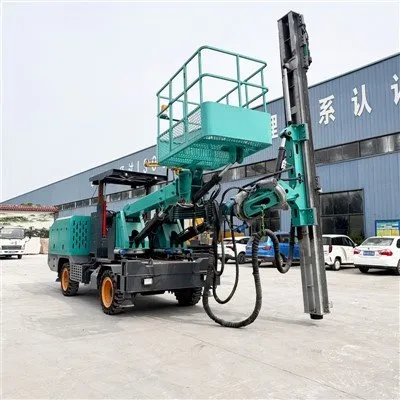
If you’re an installer, a contractor, or even a homeowner planning a small project, and you want to know more about which model would work best for your specific job—whether you need a mini one for a tiny backyard or a slightly bigger one for a medium-sized array—hit us up. We don’t do pushy sales stuff, we just give honest advice based on what we’ve seen work (and not work) over hundreds of jobs. We can also send over case studies from other installers in your area so you can see exactly how they used our solar pile drivers on residential projects. Don’t overcomplicate the process—we’re here to help make your next residential job smoother, quieter, and way less of a headache.
Solar Pile Driver References:
- Occupational Safety and Health Administration (OSHA). (2022). Noise Control in Construction. U.S. Department of Labor.
- Solar Energy Industries Association (SEIA). (2023). Residential Solar Installation Best Practices. SEIA.
- American Society of Civil Engineers (ASCE). (2021). Pile Driving Equipment for Small-Scale Construction. ASCE.
- National Association of Home Builders (NAHB). (2022). Residential Construction Noise Ordinance Guidelines. NAHB.
- International Code Council (ICC). (2023). Energy Efficiency Requirements for Residential Construction. ICC.
Jining Tongzhao Machinery Co., Ltd.
Jining Tongzhao Machinery Co., Ltd. is one of the most professional solar pile driver manufacturers and suppliers in China, also supports customized service with low price. Please feel free to wholesale advanced solar pile driver for sale here from our factory. Contact us for pricelist.
Address: 160 meters north of Hongxiang Road, east of Jiamei Road, Jining Economic Development Zone
E-mail: 13668674521@163.com
WebSite: https://www.cntzmachine.com/
