If you’ve ever been on a job site—whether it’s a warehouse restocking high shelves, a retail store getting their holiday display up, or a construction team working on a building’s facade—you’ve probably seen scissor lifts. But if you’re looking at used scissor lifts, one of the first questions people always ask me (since I’ve been selling these for over 12 years) is, “What’s their lifting speed?” It’s not a random number you can pull out of thin air, and it’s way more important than you might think. Let me break this down like I would to a new job site foreman who’s just bought their first used lift from me. Used Scissor Lift
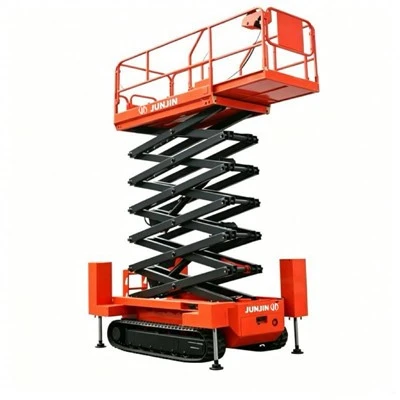
First, let’s get one thing straight: scissor lift lifting speed isn’t a one-size-fits-all number. When I show a customer a used scissor lift I’ve got in stock, I never just say “it goes this fast” and leave it at that. I walk them through the two key types of lifting speed first—drive speed (that’s how fast the whole unit moves across the ground when it’s not lifted) and platform lifting/lowering speed (that’s what most people actually mean when they ask “lifting speed”). For the sake of this post, we’re sticking to platform movement, because drive speed is a whole separate conversation about ground conditions and safety.
Now, how do manufacturers set that lifting speed? New scissor lifts usually have a lifting speed between 20 and 60 seconds to go from fully lowered to their max height. Wait, that’s a big range—why? Because it all ties to how the lift is powered, its load capacity, and its intended use. Let’s start with power sources, since that’s the biggest factor with used units. Most of the used scissor lifts I sell are either electric (battery-powered) or diesel (for outdoor, rough terrain jobs). Electric ones are way more common in indoor settings like warehouses or malls, and their lifting speed is slower—usually 30 to 60 seconds to full height. Diesel rough terrain lifts? They’re built for outdoor, heavy loads, so their lifting speed is faster, around 20 to 40 seconds. That makes sense, right? If you’re working on a construction site where you’re moving tools and workers up and down all day, you don’t want to wait a minute for the platform to go 30 feet up.
But here’s the thing with used scissor lifts: that 20-60 second range? It can shift, depending on how well the unit’s been maintained. A used electric scissor lift from a company that did weekly battery checks and changed the hydraulic fluid every 6 months? It’ll probably lift at the top end of its range, maybe even a little faster. The same exact model from a company that left it out in the rain, didn’t service it for two years, and had a broken pressure valve? It might take 70 seconds to get to full height, which is a pain on a tight schedule. That’s why I always test every used lift before I put it up for sale—last month, I had a 26-foot electric scissor lift that the previous owner said “lifted fine.” When I tested it, it took 52 seconds to go up, which is on the slower side, so I rebuilt the hydraulic seals and changed the fluid, and now it’s at 38 seconds, which is perfect for a retail store needing quick setup. I never cut corners on that testing because I’d rather be honest with a customer than have them call me a week later complaining their lift is too slow.
Another big factor is load. I can’t tell you how many times I’ve had a customer say, “This lift is rated for 500 lbs—can I fill it to the max and still get the same speed?” Nope. That’s a myth. The more weight you put on the platform, the slower the lift goes. It’s like pushing a full grocery cart vs. an empty one uphill—way harder. For example, a 32-foot used electric scissor lift I sold last week: when it’s empty, it takes 35 seconds to get to the top. When I loaded it with 500 lbs (its max), that number jumped to 42 seconds. That’s a 7-second difference, which might not sound like much, but if you’re a painter moving ladders and paint cans up and down 10 times a day, that’s 70 extra seconds a day—almost two minutes, times 5 days a week, that’s 10 extra minutes just waiting for the lift. Multiply that over a month, and that’s a lot of lost productivity. I always tell customers to plan for that—don’t expect the same speed at full load as you do empty.
What about lower speed? People forget that lowering speed is just as important as lifting speed. When you’re coming down from 30 feet up, you don’t want a lift that drops like a rock, right? OSHA has rules about this, actually—they say scissor lift lowering speed can’t be faster than lifting speed, and should be controlled so there’s no sudden drop. I once had a customer try to pass off a used lift to a buddy of his that had a broken lowering valve—their platform dropped 10 feet in 2 seconds, which is a huge safety hazard. I make sure every used lift I sell has both lifting and lowering speeds within OSHA guidelines, no exceptions. Safety first, always.
Now, let’s talk about common misconceptions I hear all the time. The big one: “Older scissor lifts are slower than new ones.” That’s not always true. Sure, some 15-year-old lifts have worn hydraulic systems that make them slow, but if they’ve been maintained, they can be just as fast as a new one. I had a 2008 40-foot diesel rough terrain scissor lift in my lot last year that lifted at 28 seconds empty—faster than a lot of new ones I’ve tested, which are usually around 30 seconds. It’s all about upkeep, not age. Another misconception: “If it’s faster, it’s better.” No way. A lift that’s too fast is dangerous, plain and simple. You need control, especially when you’re positioning heavy items or working around other workers. I once sold a used electric scissor lift to a guy who wanted to use it for moving boxes in his warehouse, and he tried to override the speed control to make it go faster. He ended up spilling a box of glass on the floor because he couldn’t adjust it quickly—told me he learned his lesson. That’s why I always explain that the speed is calibrated for safety and productivity, not just speed for speed’s sake.
If you’re shopping for a used scissor lift, what should you look for when it comes to lifting speed? First, ask the seller to give you the test time for both empty and full load, when it’s at full height. A reputable used lift supplier (that’s me, by the way) will have that number ready, no haggling required. Second, check the maintenance records. If a lift has regular service logs, it’s way more likely to be at its optimal speed. If there are no records, ask to do a test lift yourself—most job sites will let you test a lift for 10 minutes before buying, as long as you’re trained. Third, match the speed to your job. If you’re doing occasional small jobs, a slightly slower lift is fine, and it’ll save you money. If you’re running a warehouse with 10 people needing to use the lift all day, you want a faster one to keep up.
Wait, let’s circle back to that 20-60 second range. I’ve seen lifts that take 18 seconds (though those are rare, and usually heavy diesel units) and ones that take 70 seconds (usually neglected electric ones). Most mid-range used scissor lifts, whether electric or diesel, fall between 25 and 45 seconds empty, and 35 to 55 seconds at full load. That’s the sweet spot for most customers—productive, safe, and affordable, way cheaper than a new lift which can cost twice as much.
I’ve been doing this long enough to know that buying a used scissor lift can be stressful. There are so many questions: Will it work? Is it safe? How fast is it? But the lifting speed question is one of the most important because it directly affects your bottom line. A slow lift means slower work, missed deadlines, frustrated workers. A lift that’s too fast means safety risks, accidents, OSHA fines. The ones I sell? I test every speed, fix any issues before it goes out the door, and I’m always honest about what you’re getting. No hidden numbers, no fine print, no “it works when it left here.” I stand behind every used lift I sell, because I’ve been in this industry too long to cut corners.
If you’re in the market for a used scissor lift, don’t waste time guessing about lifting speed. Reach out, tell me what kind of jobs you’re doing, how high you need to go, how much weight you’re carrying, and I’ll hook you up with the right lift for your needs. I can send you test videos of the lifts in my lot, show you the maintenance records, and answer any other questions you have—no pressure, just straight talk, like I would with a fellow contractor who’s trying to make their job easier.
Wait, before I go, let’s recap the key points so you don’t forget: lifting speed for used scissor lifts is between 20 and 60 seconds for full height, depends on power source, load, and maintenance, and is regulated for safety. Don’t fall for the “faster is better” myth, always check test times and maintenance records, and work with a supplier you trust who tests every unit. That’s how you get a lift that works for you, not against you.
If you’re ready to stop stressing about lifting speeds and find the perfect used scissor lift for your team, get in touch to chat through your specific needs. No generic sales pitches, just real advice from someone who’s been selling these things for over a decade and knows what works on real job sites.
Hydraulic Rock Drill References:
- Occupational Safety and Health Administration (OSHA). Scissor Lift Safety Standards. U.S. Department of Labor, 2022.
- Access Industry Association (AIA). Scissor Lift Performance Specifications: Used Unit Evaluation Guide. AIA, 2021.
- General Safety & Compliance. Hydraulic Lift Speed Maintenance Best Practices. 2020.
Yantai Quanrui International Trading Co., Ltd.
As one of the most reliable used scissor lift manufacturers and suppliers in China, we’re featured by high quality customized products. Please rest assured to buy discount used scissor lift made in China here from our factory. Contact us for pricelist and quotation.
Address: No. 278, Sanya Road, Gaotuan Town, Fushan District, Yantai City, Shandong Province, China
E-mail: Info@quanjin1588.com
WebSite: https://www.qr1588.com/
